Before you begin
Snares can injure, restrain or kill protected wildlife and pets, including in areas that appear unoccupied. Some jurisdictions prohibit them entirely. This guide prioritizes knowing the rules and preventing accidental harm.
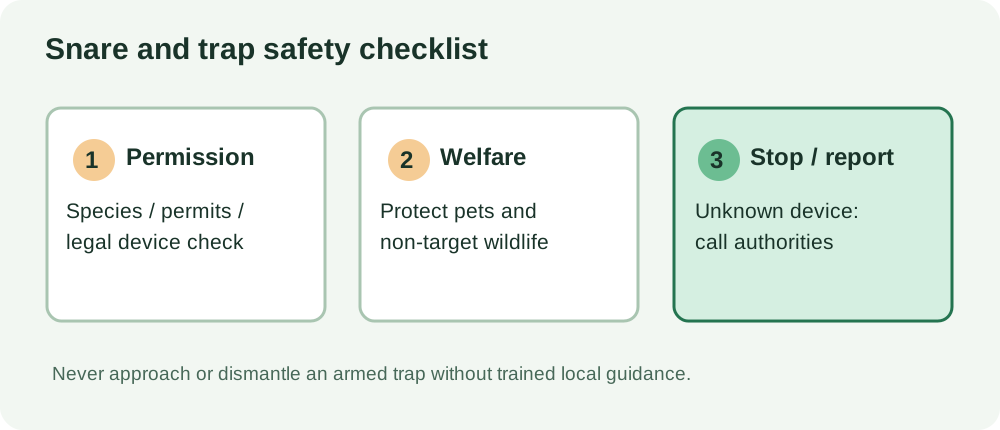
Six practical skills
Verify whether snares are legal at all
Consult the current law for the country, province/state, land and species. Do not assume a general hunting permit authorizes snares; device design, sites, trapping seasons and licence requirements may differ markedly.
Understand the animal-welfare problem
An unattended or poorly selected snare may entangle non-target species, cause prolonged distress or restrict an animal from escaping weather or predators. There is no universally humane improvised configuration.
Prevent hazards to people and pets
Do not set loops or cable devices on public trails, near homes, around pets, in protected habitats or anywhere children may encounter them. Learn to recognize suspicious wire or cable hazards without touching them.
Know when professional help is needed
If you discover an active snare or a trapped animal, keep others away, mark the location safely and contact wildlife authorities or an authorized rescue service. Handling a stressed animal or spring-loaded trap can cause serious injury.
Use non-trapping alternatives
In routine emergencies prefer stocked provisions, approved fishing where legal, cultivated food, and non-invasive wildlife observation. For nuisance animal management use a licensed wildlife-control professional.
Study formal training before any regulated use
Where legal trapping exists, accredited local training should cover species identification, device compliance, continuous monitoring obligations, humane welfare and non-target release procedures. This page is not an instruction to construct a snare.
Related guides
Reference sources
Verify local laws and manufacturer guidance before field use. Information reviewed November 2026.