--:--:--Device time · awaiting synchronization

Wild Food and Safe Foraging

Recognize candidate food sources while avoiding poisonous lookalikes, contamination, and unsafe preparation.

Downloads:Text instructions (.txt)HTML page (.html)
Illustrated reference · Wild foods

Illustrated Wild Edible Foods Reference

This page groups commonly taught wild foods by what they contribute: fruit, greens, roots and calorie-dense foods.

Important identification limit

Identification warning: Botanical drawings are educational illustrations, not diagnostic photographs. They can omit details and may not show regional variants or dangerous lookalikes. Never eat a plant based on an image, color, smell, or this website alone; obtain a qualified local identification and verify the exact edible part and preparation.

Fruit and seasonal supplements

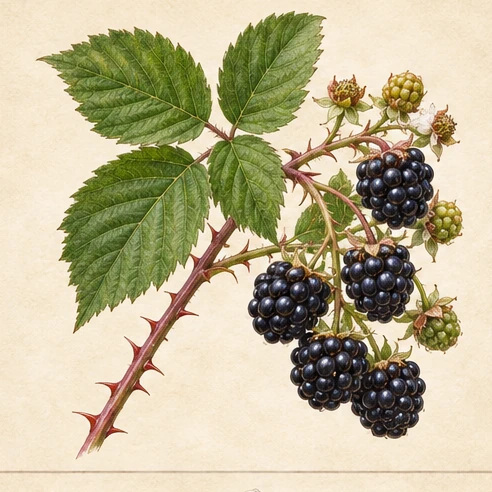
Blackberry botanical illustration

BlackberryBlackberry previewDownload image

fruitraw or cooked

Where to find it: Sunny hedgerows, field edges and bramble thickets.

What to eat: Fully ripe black berries.

Preparation: Rinse with safe water; eat fresh, dry, or simmer into syrup.

Do not use when: Avoid dusty roadside thickets and moldy fruit.
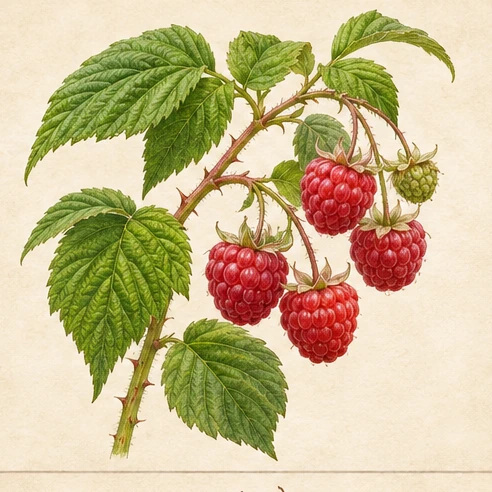
Wild Raspberry botanical illustration

Wild RaspberryWild Raspberry previewDownload image

fruitfresh

Where to find it: Woodland edges, clearings and old farm margins.

What to eat: Ripe red aggregate berries; young leaves sometimes dried for tea in local traditions.

Preparation: Rinse, eat fresh, or dry on screens.

Do not use when: Use species confirmation because other brambles vary.
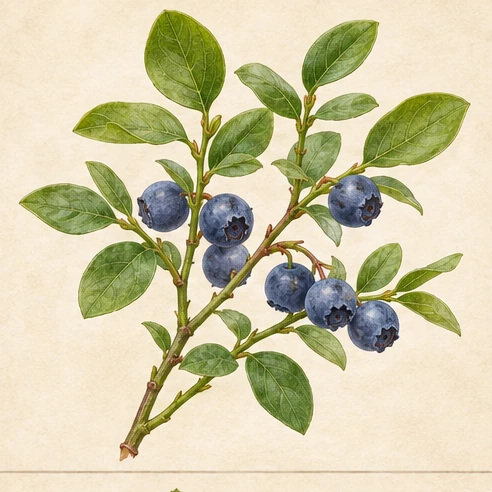
Blueberry / Bilberry botanical illustration

Blueberry / BilberryBlueberry / Bilberry previewDownload image

fruitantioxidant source

Where to find it: Heaths, acidic woodland and upland scrub.

What to eat: Blue berries only when fully ripe.

Preparation: Eat fresh, dry slowly, or mash into preserves.

Do not use when: Do not confuse with ornamental or toxic berries.
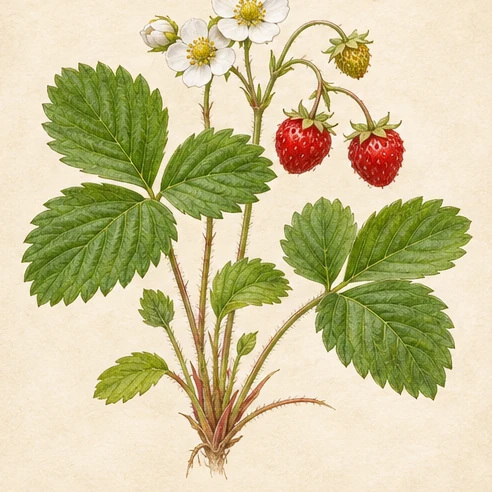
Wild Strawberry botanical illustration

Wild StrawberryWild Strawberry previewDownload image

fruitfresh

Where to find it: Sunny grassy edges, paths and light woodland.

What to eat: Small ripe red berries and occasionally the young leaves for tea.

Preparation: Eat fresh; handle gently.

Do not use when: Low yield means it supplements rather than sustains calories.
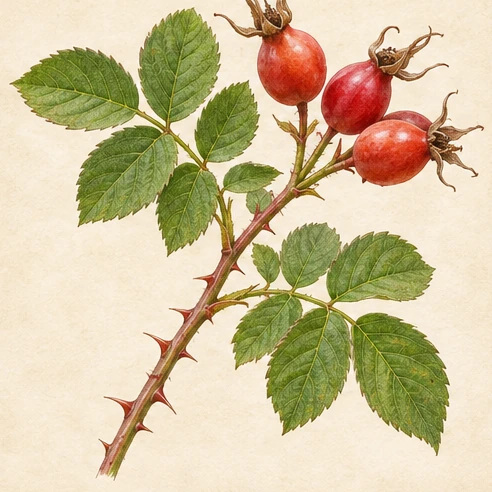
Rose Hips botanical illustration

Rose HipsRose Hips previewDownload image

fruitcook first

Where to find it: Hedges and wild rose tangles after flowering.

What to eat: Ripe hips after removing seeds and irritating inner hairs.

Preparation: Slice, remove hairs and seeds, then simmer into syrup or tea.

Do not use when: Inner hairs can irritate the mouth and gut.
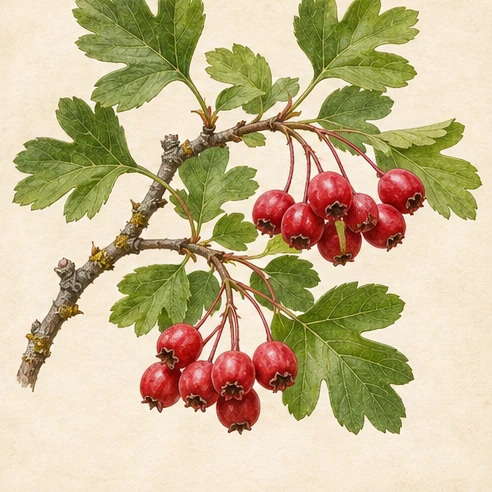
Hawthorn Haws botanical illustration

Hawthorn HawsHawthorn Haws previewDownload image

fruitcook first

Where to find it: Mixed hedgerows and scrub.

What to eat: Ripe red haws, usually after cool weather.

Preparation: Cook into leather, ketchup, or mash through a sieve.

Do not use when: Hard seeds are not eaten; confirm species locally.
Greens and wetland foods

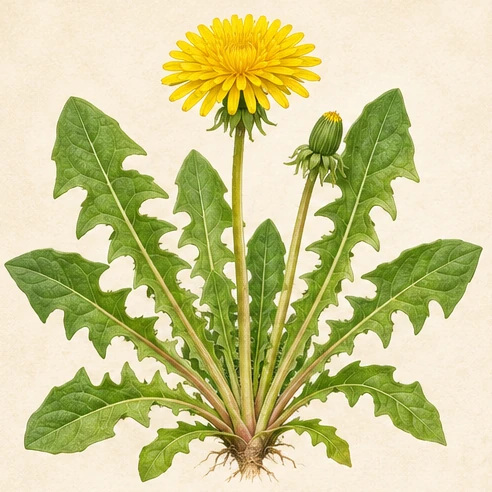
Dandelion botanical illustration

DandelionDandelion previewDownload image

greensroot

Where to find it: Lawns, meadows and disturbed ground away from sprays.

What to eat: Young leaves, flower petals and cleaned roots.

Preparation: Soak bitter leaves, cook greens, roast cleaned roots.

Do not use when: Avoid bitter older leaves and sprayed lawns.
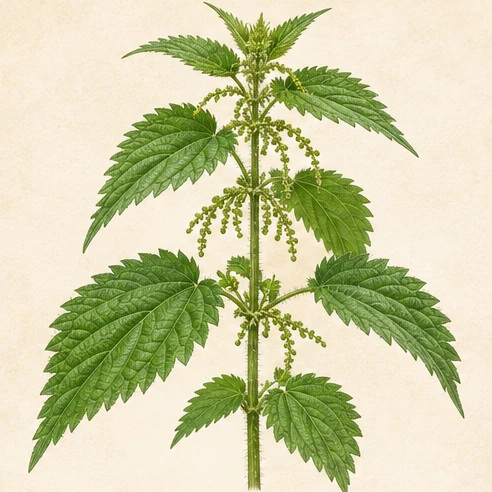
Stinging Nettle botanical illustration

Stinging NettleStinging Nettle previewDownload image

greenscook first

Where to find it: Rich soils, streambanks and old homesteads.

What to eat: Young top leaves and shoots only.

Preparation: Wear gloves; steam or boil to neutralize stinging hairs.

Do not use when: Do not eat raw mature leaves.
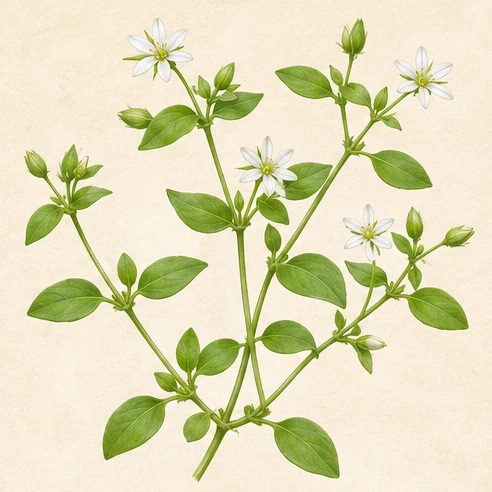
Chickweed botanical illustration

ChickweedChickweed previewDownload image

salad green

Where to find it: Cool damp garden edges and cultivated soil.

What to eat: Tender above-ground stems and leaves.

Preparation: Use sparingly fresh or wilt briefly into soups.

Do not use when: Avoid if identification is uncertain; several small weeds look alike.
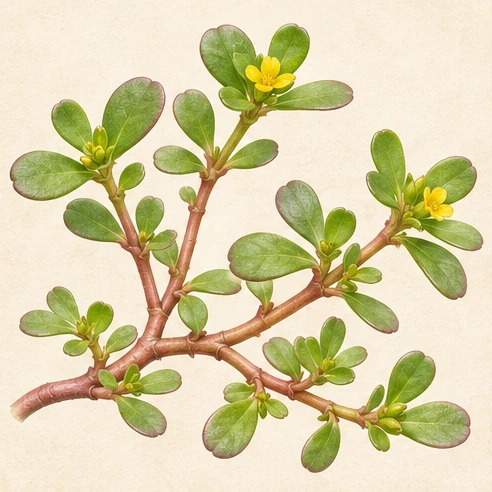
Purslane botanical illustration

PurslanePurslane previewDownload image

succulentomega-3 rich

Where to find it: Warm compacted soil, gardens and sunny disturbed ground.

What to eat: Succulent stems, leaves and tips.

Preparation: Rinse and eat raw, pickle, or add to stews.

Do not use when: Avoid polluted urban ground.
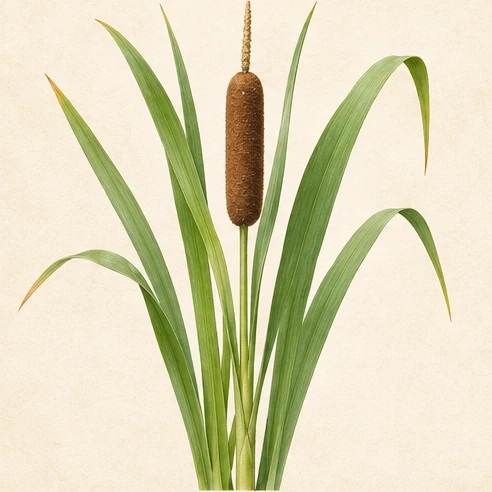
Cattail botanical illustration

CattailCattail previewDownload image

wetlandmulti-part

Where to find it: Freshwater marshes and pond margins.

What to eat: Young shoots, pollen, and cleaned rhizomes from clean water only.

Preparation: Peel shoots; roast or mash rhizomes; dry pollen as flour extender.

Do not use when: Never harvest from contaminated or sewage-affected wetlands.
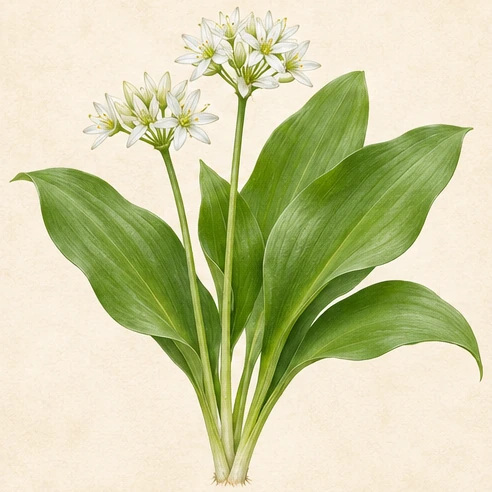
Wild Garlic / Ramsons botanical illustration

Wild Garlic / RamsonsWild Garlic / Ramsons previewDownload image

leafstrong ID needed

Where to find it: Shaded woodland and damp banks in spring.

What to eat: Leaves, flowers and bulbs in season.

Preparation: Use raw or lightly cooked; crush to confirm a garlic smell.

Do not use when: Without the garlic odor, do not eat—dangerous lookalikes exist.
Nuts, tea plants and roots

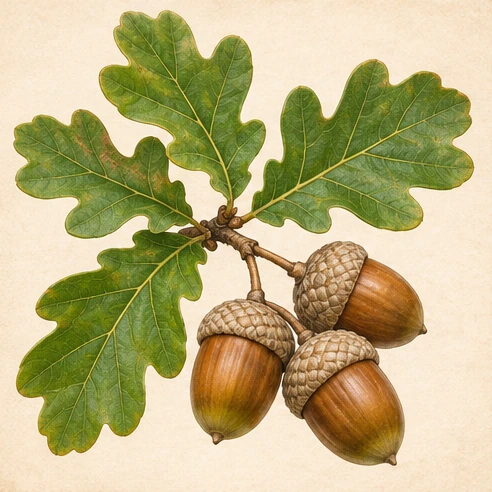
Acorn botanical illustration

AcornAcorn previewDownload image

nutprocessing required

Where to find it: Oak woodland and parkland.

What to eat: Sound acorns only, once shell removed and tannins leached.

Preparation: Shell, chop, leach in repeated water changes, then roast or grind.

Do not use when: Never eat unprocessed bitter acorns.
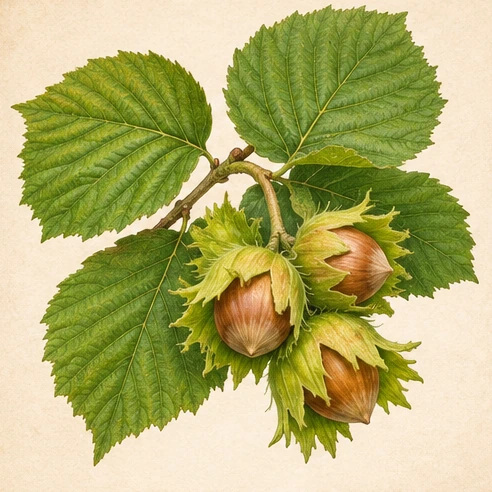
Hazelnut botanical illustration

HazelnutHazelnut previewDownload image

nutenergy dense

Where to find it: Hedgerows and coppice woodland.

What to eat: Mature nuts from papery husks.

Preparation: Dry thoroughly and shell.

Do not use when: Discard moldy or insect-damaged nuts.
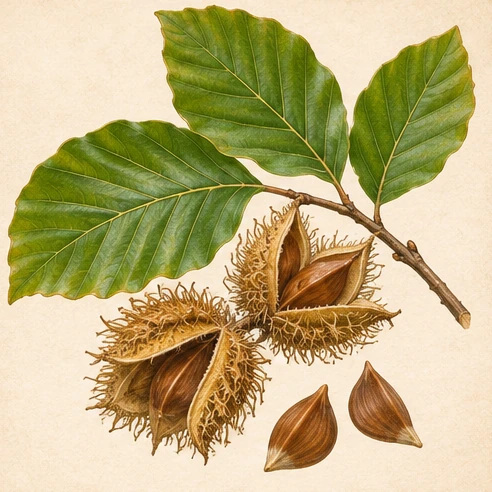
Beech Nut botanical illustration

Beech NutBeech Nut previewDownload image

nutmast crop

Where to find it: Beech woodland in mast season.

What to eat: Triangular nuts from opened husks.

Preparation: Toast or roast in small amounts.

Do not use when: Do not overeat; use as a supplement rather than staple.
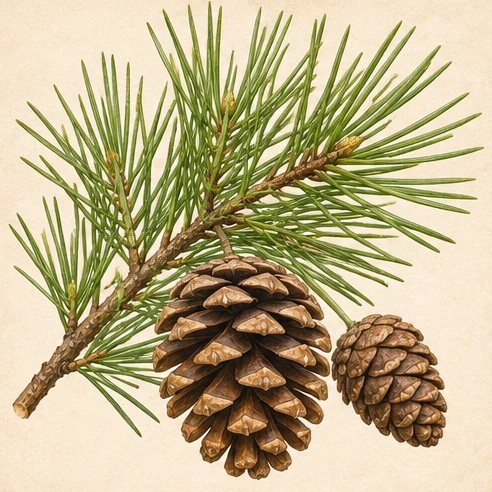
Pine Needles botanical illustration

Pine NeedlesPine Needles previewDownload image

teaaromatic

Where to find it: Pine woodland with known non-toxic pine species.

What to eat: Fresh green needles for tea.

Preparation: Steep cut needles in hot but not violently boiling water.

Do not use when: Know the species; do not assume all conifers are safe for tea.
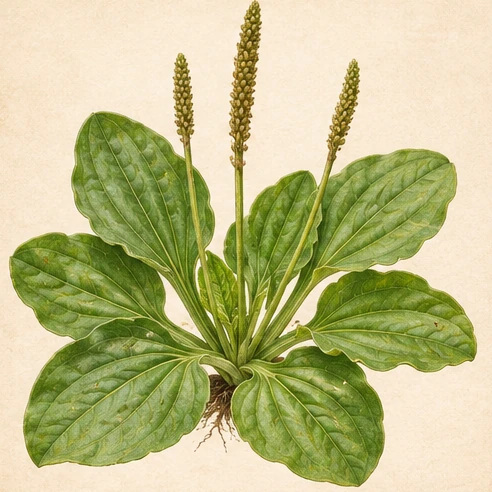
Broadleaf Plantain botanical illustration

Broadleaf PlantainBroadleaf Plantain previewDownload image

greens

Where to find it: Paths, lawns and compacted soils.

What to eat: Young leaves and seedheads.

Preparation: Cook older leaves; use young leaves sparingly raw.

Do not use when: Older leaves become fibrous.
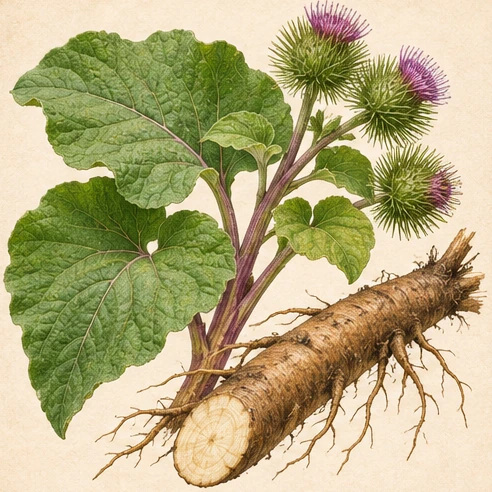
Burdock Root botanical illustration

Burdock RootBurdock Root previewDownload image

rootcook first

Where to find it: Waste ground and field margins in first-year plants.

What to eat: First-year roots and peeled stems.

Preparation: Scrub, peel, slice and simmer until tender.

Do not use when: Older roots become woody; harvest away from roads.

Field learning approach

Learn a small number of reliable species thoroughly rather than skimming many uncertain ones. Keep one page of notes for each food: habitat, season, edible part, lookalikes, preparation and any allergies or medication interactions.

Identification and safety sources