Immediate rule
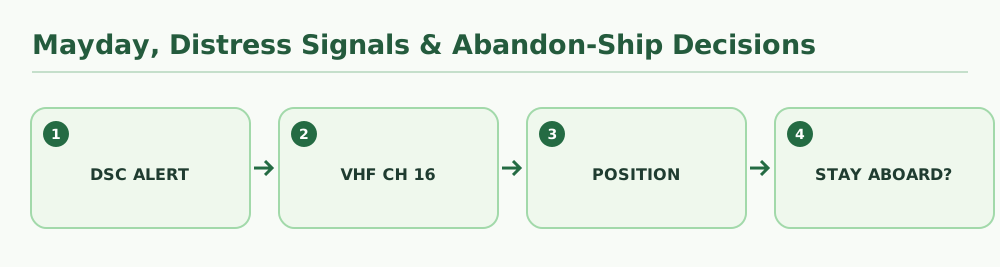
Use MAYDAY for grave and imminent danger requiring immediate assistance. If the vessel remains a safe place to await rescue, do not abandon it merely because help has been called.
Five practical skills
Use these steps for preparation and decision-making. Emergency responders and live warnings take priority.
Send a distress alert
Rule: Use the emergency equipment you have.
- For a life-threatening maritime emergency, activate a correctly configured DSC distress alert if equipped.
- On marine VHF, call MAYDAY on Channel 16 (156.8 MHz) and listen for a response.
- Use a registered EPIRB/PLB as designed when needed, especially beyond reliable VHF or phone coverage.
Transmit essential facts
Rule: Give rescuers the information they need.
- Say MAYDAY three times; identify your vessel by name and call sign/MMSI if known.
- State precise position, nature of distress, assistance needed and the number of people onboard.
- Add relevant injuries, vessel description and other hazards; remain on the radio when possible.
Understand the different alarms
Rule: Match the signal to the seriousness.
- MAYDAY is for immediate grave danger; urgency and safety calls use different procedures taught in marine radio training.
- A DSC radio needs correctly programmed MMSI and a reliable GPS input to include your position automatically.
- Avoid testing a live distress alert; use built-in test modes and registration instructions.
Prepare but avoid premature abandonment
Rule: Survival craft is a last-resort transition.
- Account for all crew, distribute lifejackets and ready the raft, grab bag, beacon and signaling equipment.
- Remain with the vessel while it is safer than entering the water or a raft, unless fire, sinking or rescuers require departure.
- When abandoning is necessary, follow liferaft instructions, avoid entering cold water where possible and keep people together.
Survive while waiting for rescue
Rule: Conserve warmth and make yourself findable.
- Once in a survival craft, keep people secure, out of the water and as protected from wind and spray as possible.
- Keep beacon antennas and distress signals operated according to manufacturer instructions; follow rescue instructions.
- Treat cold-water exposure and injuries, limit unnecessary movement and use available visibility aids when rescuers approach.
Practice before an emergency
- Write a MAYDAY script with your vessel name and example coordinates.
- Check your DSC/MMSI/GPS connection and beacon registration before departure.
- Show passengers where the life raft and distress signals are stored.
Safety and local guidance
Training, weather, the vessel manufacturer, local laws and emergency services take precedence over these general notes. The correct response depends on real conditions.
Reference sources:
- RNLI — boating and sailing safety
- RNLI — how to call for help at sea
- US Coast Guard — VHF MAYDAY procedure
- NWS — boating in thunderstorms
Review current official advice before applying high-risk guidance.