Field guide · Bushcraft
Purpose and safe boundaries
Original illustrated bushcraft instruction: site selection, tarp shelter, cordage, tools, fire, weather and camp hygiene.
Reviewed: November 2026. This educational guide does not replace accredited training, equipment manuals, local rules, medical professionals or live emergency instructions.
Start with permission, weather and an exit plan
Bushcraft is the practice of making practical use of materials and equipment outdoors. Plan it as a low-impact activity, not a survival experiment. Check landowner rules, fire bans, wildlife seasons, forecast and nearby water hazards. Leave a route, return time and check-in plan with someone.
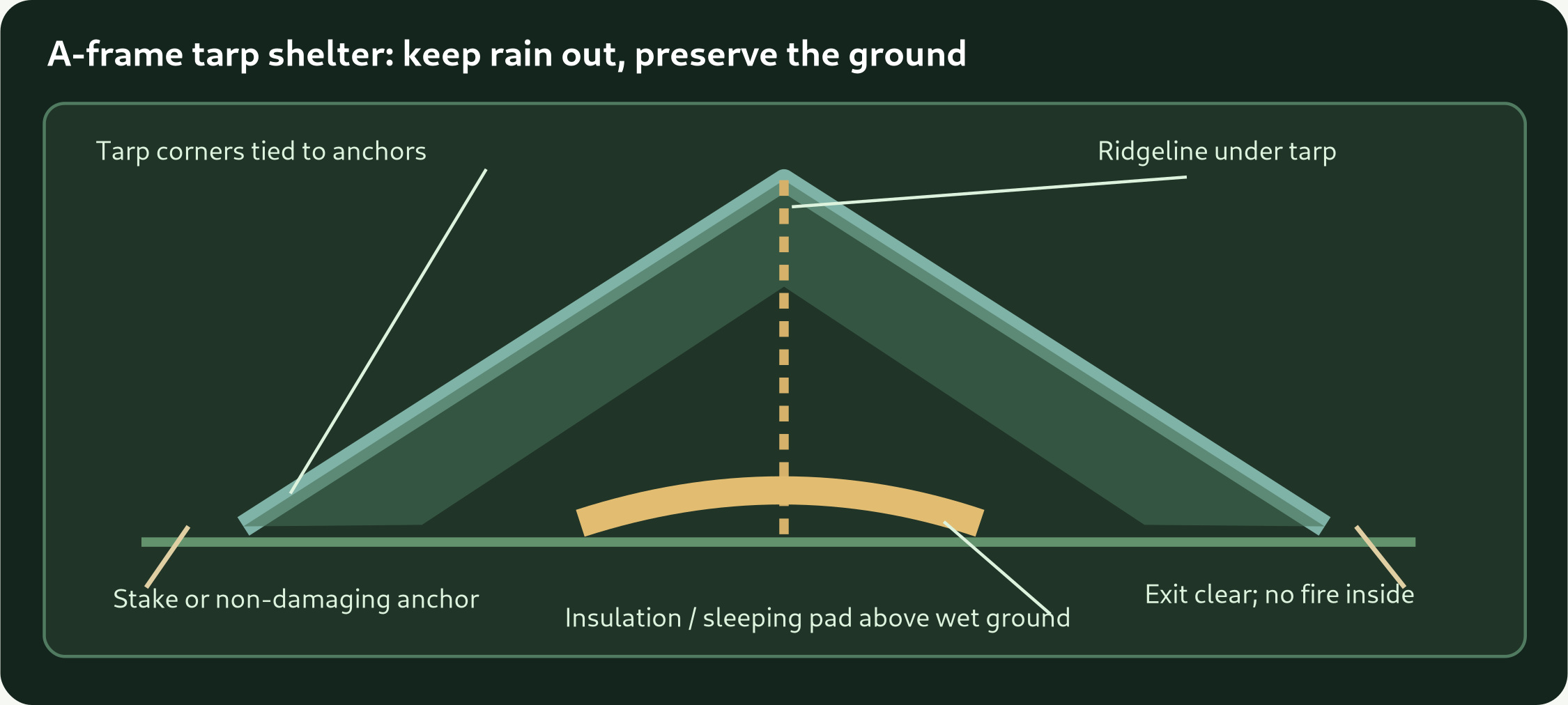
Original drawing: a low-impact tarp shelter
Choose and assess a campsite
- Choose an established site on level ground; stay away from flood channels, loose cliffs, dead overhead branches and isolated ridge crests in storms.
- Look for drainage; never obstruct paths, water courses or animal trails.
- Locate drinking-water sources, sanitation sites and evacuation routes before dark; filter and disinfect water as needed.
- Keep cooking, food storage and sleeping areas separate according to local wildlife guidance.
Pitch a simple non-destructive tarp shelter
- Inspect cordage and tarp grommets. Protect trees with wide straps if anchor use is permitted.
- Run a ridgeline between stable anchors below potentially falling limbs and away from trails.
- Drape tarp evenly; tension corners to stakes or approved anchors, leaving enough ventilation and rain runoff.
- Place an insulating pad above wet ground; angle the low side toward prevailing rain, keeping an escape path.
- Check and retension after rain or wind. Take everything down and restore the site.
Knife, saw, cordage and knots
Use a fixed work area and cut away from hands and legs. Keep bystanders outside the cutting arc; sheath tools during movement. Inspect tool handles and saw blades before use. For small tasks use pre-cut materials rather than harvesting green wood. Learn a bowline for a non-slipping loop, a taut-line hitch for adjustable guy lines and a trucker’s hitch for tension. Knots reduce rope strength; inspect after loading and avoid life-safety applications without rated equipment and training.
Fire and stove discipline
Prefer a stable camping stove in permitted areas. Check that all fires are legal and that conditions are safe. Keep flame away from tents and fuel. Extinguish completely until cold; never leave embers unattended. Never use charcoal, grills or combustion stoves inside tents, vehicles or enclosed spaces because carbon monoxide can kill without warning.
Food, water and hygiene
Separate raw food, clean drinking water and waste. Wash hands before preparing food. Use tested filtration/disinfection approaches suited to the source; boiling does not remove chemical contamination. Use approved sanitation facilities or locally required backcountry waste practices, and pack out trash and food scraps.
Practice checklist
Related survival guides
References and further reading
Checked against publicly available guidance; verify local rules and the manufacturer’s current manual before use.