Immediate rule
Evacuate immediately when ordered or when remaining is unsafe. Do not delay leaving a dangerous building to collect equipment, possessions or documents.
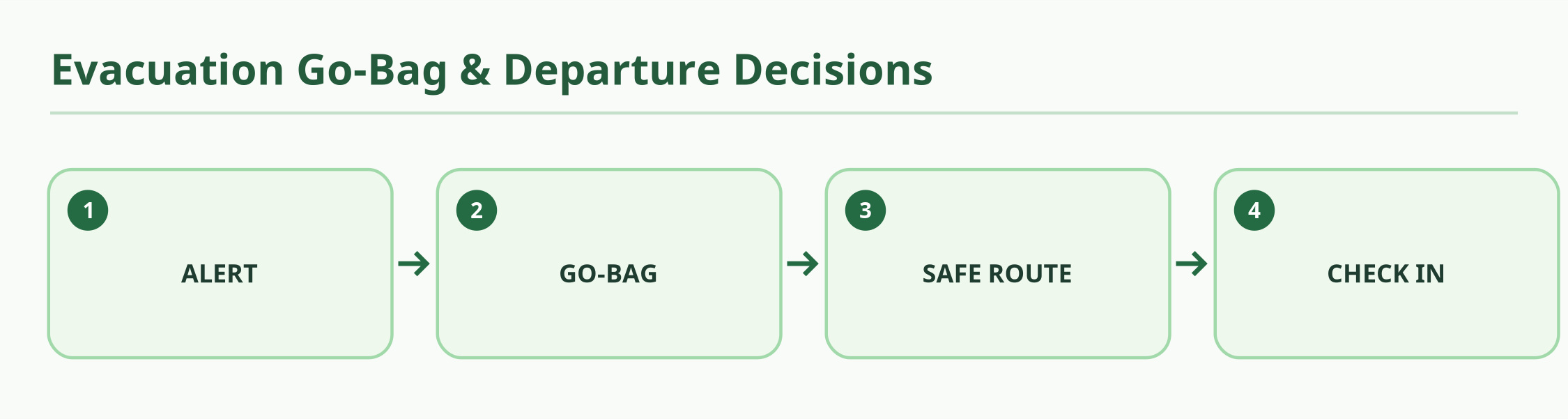
Five practical skills
Use these steps for preparation and decision-making. Emergency responders and live warnings take priority.
Know when to leave
Rule: Official warnings and immediate hazards override convenience.
- Identify local alert sources and which events require immediate evacuation, such as active fire or fast-rising water.
- Learn safe primary and secondary exit routes and do not enter floodwater or smoke to retrieve supplies.
- Plan where people with limited mobility, pets and service animals can go.
Pack a lightweight go-bag
Rule: Only carry what supports safe evacuation.
- Put critical medication, copies of documents, a phone charger, light, essential clothing and a compact first-aid kit in one bag.
- Add water and easy-to-eat snacks without making the bag too heavy to move safely.
- Use waterproof pouches for documents, cash and a list of contacts; keep everyday medication accessible.
Choose destinations and routes
Rule: Have alternatives ready.
- Identify shelter options, relatives or approved public shelters outside local hazard areas.
- Mark more than one route and check current official road, bridge and transit information.
- Do not follow a saved navigation route into road closures, floodwater, wildfire or unstable terrain.
Leave safely
Rule: Avoid creating new hazards during departure.
- If time permits, secure necessary utilities only according to official guidance and without exposing yourself to danger.
- Tell your designated contact where you are going when it is safe to communicate.
- Bring assistive devices, essential medications and pets if the plan permits; never re-enter an unsafe building.
Check in after arrival
Rule: Safety includes accounting for everyone.
- Confirm names, current location and condition using the household check-in format.
- Follow shelter instructions and official updates; avoid spreading unverified alerts.
- Return only after authorities have cleared the area and hazards have been assessed.
Practice before an emergency
- Time a realistic safe departure with your go-bag.
- Mark an alternate route that avoids known flood zones.
- Review accessibility and pet arrangements.
Safety and local guidance
Training, weather, the vessel manufacturer, local laws and emergency services take precedence over these general notes. The correct response depends on real conditions.
Reference sources:
- Dutch government — emergency kit
- British Red Cross — emergency preparedness
- American Red Cross — make a plan
Review current official advice before applying high-risk guidance.