Immediate rule
Do not depart when the forecast, visibility, craft condition or crew capability makes the trip unsafe. Wear an appropriate, correctly fitted lifejacket.
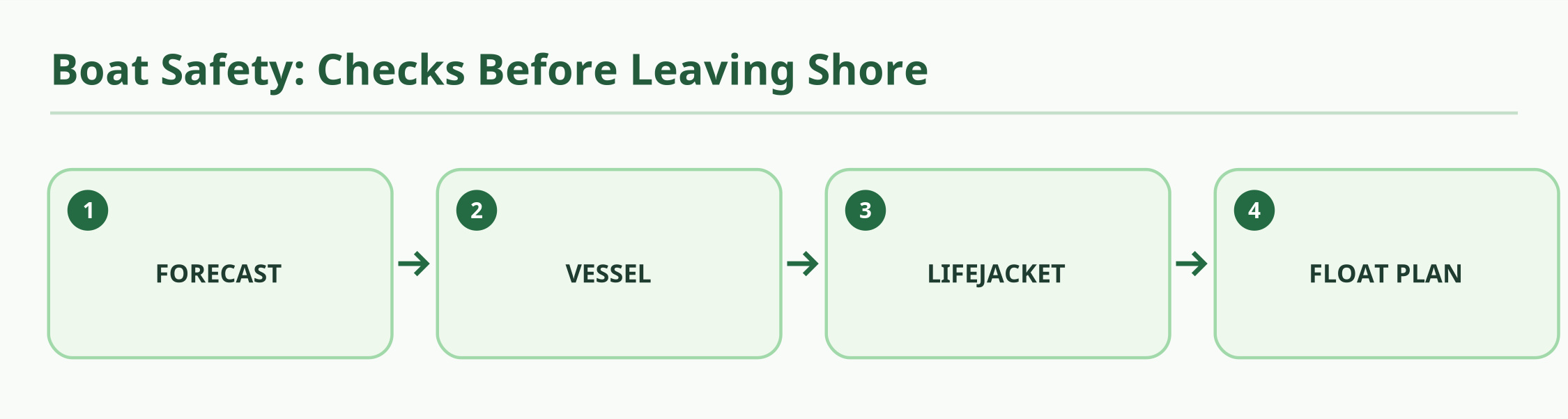
Five practical skills
Use these steps for preparation and decision-making. Emergency responders and live warnings take priority.
Check weather and water conditions
Rule: A calm marina does not guarantee a safe passage.
- Review marine forecasts, wind, swell, thunderstorms, tides, currents and local notices.
- Set no-go conditions suitable for the boat, experience and passengers; postpone when the forecast exceeds them.
- Know nearby safe harbours and when strong current or a tidal gate makes access unsafe.
Inspect the boat and equipment
Rule: Failures are harder to manage afloat.
- Check hull, bilge, hoses, seacocks, steering, fuel, engine cooling, battery and navigation lights.
- Inspect rigging, sails, lines and reefing gear on sailing boats; confirm anchor and ground tackle.
- Check fire extinguisher, bailer/pump, first-aid kit, navigation tools and any required local safety equipment.
Fit flotation and brief everyone
Rule: Every passenger should know the basics.
- Choose and correctly fit lifejackets appropriate to the activity, water and person; check children separately.
- Show the location of emergency gear and demonstrate how to call for help.
- Name a backup helm/operator and review a person-overboard response and engine-stop procedure.
Plan and share your route
Rule: Leave a shore contact who will notice a delay.
- Set departure, route, estimated return, passenger count and fallback destinations.
- Share the plan with a responsible person on shore and agree when they should raise concern.
- Carry a working navigation method and backup; never rely entirely on one phone or chartplotter.
Keep a safe watch
Rule: Continue checking conditions after departure.
- Maintain lookout and proper speed, especially around swimmers, shoals, traffic and poor visibility.
- Track fuel/power, bilge level, wind and sea state; turn back before conditions become unmanageable.
- Keep appropriate radio watch, follow local rules and avoid alcohol or impaired operation.
Practice before an emergency
- Carry out a written predeparture checklist.
- Try on and inspect every passenger lifejacket.
- Make a float plan and brief a shore contact.
Safety and local guidance
Training, weather, the vessel manufacturer, local laws and emergency services take precedence over these general notes. The correct response depends on real conditions.
Reference sources:
- RNLI — boating and sailing safety
- RNLI — how to call for help at sea
- US Coast Guard — VHF MAYDAY procedure
- NWS — boating in thunderstorms
Review current official advice before applying high-risk guidance.