Immediate rule
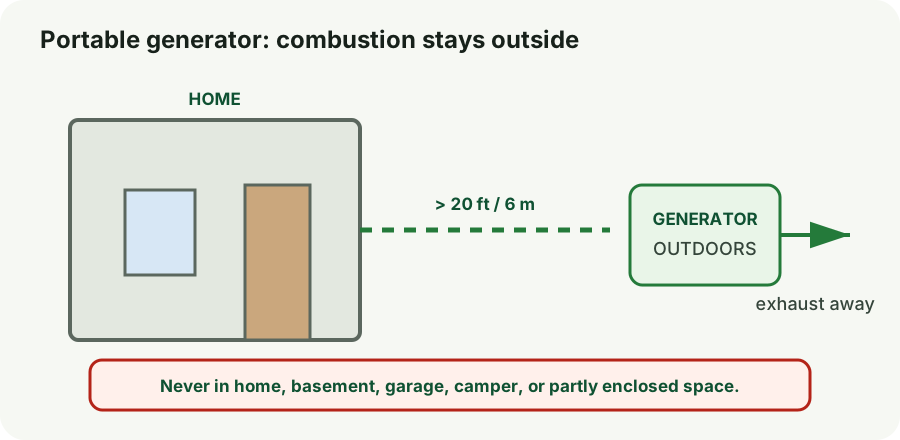
Never use a portable generator, charcoal grill, camp stove, or other fuel-burning device indoors or in a garage. Portable generators belong outdoors more than 20 ft / 6 m from doors, windows, and vents, with a working battery CO alarm in the home.
Five skills to master
Learn these five competencies in order. Each section below gives a rule, a procedure, and the boundaries that prevent common mistakes.
Outage triage and communications
Rule: First determine whether the problem is local, building-wide, or regional without approaching damaged electrical equipment.
- Check safely. Look at neighboring buildings/street lighting and utility alerts rather than opening panels or touching damaged service equipment.
- Preserve phone power. Low-power mode, reduced brightness, short calls/texts, and a charged power bank extend useful time.
- Use flashlights/lanterns first. Open flames add fire risk during a dark, disrupted environment.
- Get official information. Utility restoration estimates, boil-water advisories, evacuation/cooling/warming center locations, and road closures change decisions.
- Set a relocation threshold. If temperature, medical power, water, or safety will become unacceptable before restoration, leave early for a safer location.
Generator and carbon-monoxide safety
Rule: Combustion stays outside. Ventilation through an open door or garage door does not make indoor generator use safe.
- Place portable generators outdoors more than 20 ft / 6 m from windows, doors, and vents. Point exhaust away from the building.
- Never use a generator in a home, basement, garage, shed attached to living space, camper, or other enclosed/partly enclosed area.
- Never use charcoal grills, portable camp stoves, or gas ovens/ranges to heat living space.
- Run a battery-powered or battery-backup CO alarm. Make sure everyone can hear it.
- If CO is suspected: get to fresh air if this can be done safely, call emergency services/poison advice, and do not re-enter until responders say it is safe.
Practical note
Common CO poisoning symptoms include headache, dizziness, weakness, nausea/vomiting, chest pain, and confusion. Sleeping people can be overcome before they notice symptoms.
Electrical and fire safety
Rule: Treat downed lines and improvised wiring as lethal hazards.
- Stay far from fallen wires and anything they touch, including fences and water.
- Do not back-feed a building by plugging a generator into a wall outlet. Use an approved transfer system installed as required.
- Use extension cords and generator loads within manufacturer ratings. Keep connections dry and protected.
- Unplug/switch off sensitive loads when appropriate. Restore major loads gradually after power returns.
- Do not enter flooded electrical areas. Let the utility/electrician make the system safe.
Temperature and medical-device planning
Rule: Do not replace lost heating/cooling with unsafe combustion. Relocate before the indoor environment becomes medically dangerous.
- Cold: close unused rooms, add dry layers/blankets, and move to an approved warming location if safe heat is unavailable.
- Heat: use shade/ventilation if conditions allow and move to an approved cooling location before vulnerable people overheat.
- Medical equipment: use the device manufacturer/provider emergency plan, battery reserve, or approved backup power.
- Medication: follow pharmacy/medical guidance for items requiring refrigeration; do not guess based on touch.
- Check vulnerable people. Older adults, infants, people with chronic illness, and isolated neighbors may need earlier relocation.
Food, water, lighting, and recovery
Rule: Keep cold appliances closed, treat water according to advisories, and restore the home deliberately instead of all at once.
- Refrigerator: unopened, it generally keeps food cold about 4 hours.
- Freezer: unopened, a full freezer is roughly 48 hours; a half-full freezer about 24 hours.
- Never taste food to judge safety. Use a thermometer and official discard guidance.
- Water: follow boil/do-not-drink/do-not-use advisories exactly; loss of power can affect pumps and treatment systems.
- After restoration: check for unusual smells, heat, sparks, or appliance damage and keep CO alarms active while backup equipment is being shut down.
Practice before an emergency
- Measure a 20 ft / 6 m generator exclusion distance around your home before an outage.
- Test CO alarms monthly and replace batteries/units on schedule.
- Label the circuits/loads that backup power can safely support.
- Keep one flashlight where each person sleeps.
- Write a relocation trigger for indoor temperature and medical battery reserve.
Use guides as references, not substitutes for training
Conditions, local law, official emergency instructions, product instructions, and hands-on training can change what is appropriate. When an emergency service or responsible authority gives you a specific instruction for the active incident, follow it.
Reference sources:
- CDC — Protect Yourself During a Power Outage
- CDC — Carbon Monoxide Poisoning Basics
- FoodSafety.gov — Food Safety During Power Outage
Source links are included so the guide can be checked against current official guidance. Review dates and local instructions before high-risk travel or seasonal hazards.