Immediate rule
Water and medical/shelter needs come before food. Keep refrigerator/freezer doors closed during outages, never taste food to decide whether it is safe, and discard high-risk perishable food once official time/temperature limits are exceeded.
Five skills to master
Learn these five competencies in order. Each section below gives a rule, a procedure, and the boundaries that prevent common mistakes.
Build a three-day food module
Rule: Store foods you already tolerate and can eat with little or no cooking, then scale the same module to more days.
- Choose shelf-stable basics. Ready-to-eat canned/pouched foods, nut/seed products where safe, crackers, oats/cereal, dried fruit, shelf-stable milk, and other familiar foods.
- Include protein, carbohydrate, fat, and salt. Emergency eating is easier when each meal is complete enough to maintain energy.
- Include special needs. Infant food, allergies, medical diets, texture needs, and pet food cannot be improvised reliably after stores close.
- Include a manual can opener and utensils.
- Store water separately. Food planning does not replace the water plan.
Rotate and protect the food reserve
Rule: The best emergency food is ordinary food that is labeled, protected, and rotated before expiry.
- Date every module. Put the oldest food at the front and use it in normal meals.
- Protect from heat, moisture, pests, and flooding.
- Inspect packaging. Discard bulging, leaking, badly dented at seams, rusted-through, or otherwise compromised containers.
- Keep cooking fuel limits in mind. Do not build a reserve that requires hours of boiling when your emergency stove/fuel cannot support it.
- Recheck twice a year. Replace expired items and update dietary needs.
Ration effort and meal timing
Rule: Do not sharply restrict food in the first hours while doing heavy work; reduce unnecessary exertion and use normal, measured meals once immediate hazards are controlled.
- Prioritize water and temperature control. Dehydration and exposure impair function sooner than lack of food.
- Front-load tasks, not starvation. Eat enough to perform evacuation, shelter, medical, and water tasks safely.
- Use planned portions. Divide the reserve by people and days after you know the likely disruption length.
- Favor low-preparation meals during power loss. This saves fuel and reduces kitchen fire/CO risk.
- Do not eat questionable food to “avoid waste.” Foodborne illness makes a survival problem worse.
Power-outage food safety
Rule: Time and temperature decide safety, not smell or taste.
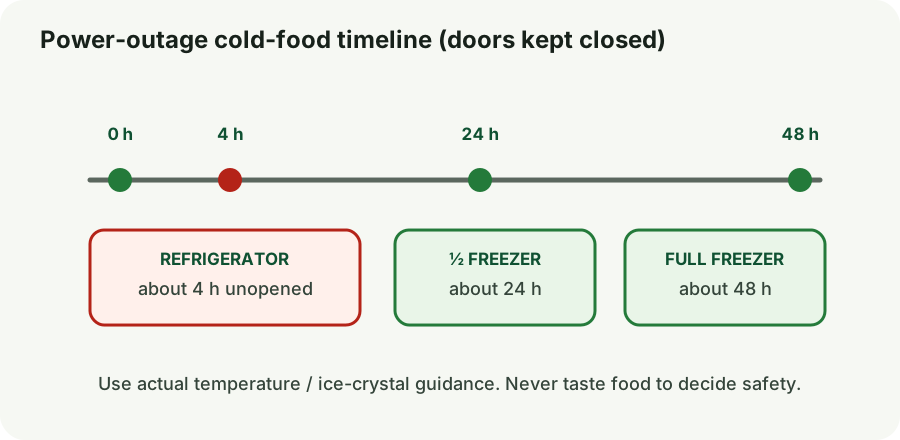
- Keep doors closed. An unopened refrigerator keeps food cold for about 4 hours.
- Freezer: about 48 hours when full or 24 hours when half-full if unopened.
- After 4 hours without power/cold source, discard refrigerated perishable foods such as meat, poultry, fish, eggs, milk, and leftovers unless reliable temperature data shows they stayed safe.
- Frozen foods may be refrozen if they still contain ice crystals or are at 40°F / 4°C or below, though quality may decline.
- Never taste food to test safety. Use official food-specific charts when uncertain.
Flood/fire contamination and no-cook planning
Rule: Smoke, floodwater, sewage, chemicals, and damaged packaging can make food unsafe even if it looks normal.
- Floodwater: discard food in non-waterproof packaging and any food directly contacted by floodwater unless official guidance explicitly permits salvage.
- Fire/chemical event: follow local health/fire authority guidance; heat, fumes, and firefighting chemicals can contaminate exposed food.
- No-cook module: keep at least one day of food that can be eaten cold if fuel or ventilation is unavailable.
- Use a thermometer in refrigerator/freezer. It gives better evidence than touch.
- When in doubt, throw it out. Do not gamble on food safety during an already stressful event.
Practice before an emergency
- Assemble one labeled 72-hour food bin per household, then calculate how many bins are needed for your target duration.
- Run one no-cook day from the emergency food module and note missing utensils/foods.
- Place appliance thermometers in the refrigerator and freezer.
- Create a rotation reminder every six months.
- Keep a printed power-outage food-safety chart with the food bin.
Use guides as references, not substitutes for training
Conditions, local law, official emergency instructions, product instructions, and hands-on training can change what is appropriate. When an emergency service or responsible authority gives you a specific instruction for the active incident, follow it.
Reference sources:
- FoodSafety.gov — Three Ways to Keep Food Safe When You Lose Power
- FoodSafety.gov — Food Safety During Power Outage
- Ready.gov — Emergency Supply Checklist
Source links are included so the guide can be checked against current official guidance. Review dates and local instructions before high-risk travel or seasonal hazards.
Related essential field guides
Additional procedures and printable references: