Immediate rule
Use safe water for drinking and food, wash hands with soap for at least 20 seconds when possible, keep human waste away from water/food/living areas, and treat diarrhea as a hydration problem as well as a sanitation problem.
Five skills to master
Learn these five competencies in order. Each section below gives a rule, a procedure, and the boundaries that prevent common mistakes.
Hand hygiene and a simple wash station
Rule: Soap and safe water are the default. Hand sanitizer with at least 60% alcohol is a backup when hands are not visibly dirty/greasy and soap/water are unavailable.
- Wet, lather, scrub, rinse, dry. Scrub all hand surfaces for at least 20 seconds.
- Key times: before food preparation/eating, before feeding children, after toilet use/diapering, after cleaning, and before/after wound care.
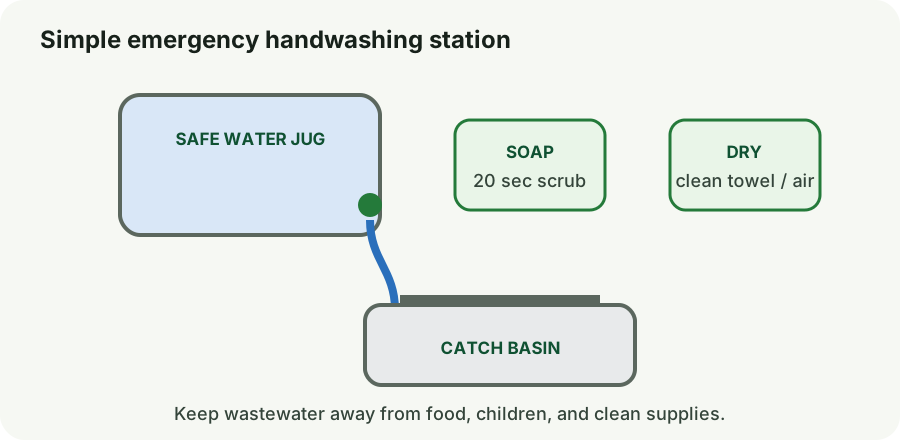
- Make a station. Put a water jug with a controllable spout above a catch basin, with soap and clean drying material nearby.
- Prevent recontamination. Do not touch a dirty faucet/handle after washing; use a clean towel/barrier if necessary.
- Follow water advisories. Local authorities may give specific rules for handwashing during boil/do-not-use advisories.
Human waste containment
Rule: Keep feces out of water, food areas, sleeping areas, and floodwater. Use functioning toilets when authorities say sewer/septic systems are safe; otherwise use the recommended temporary system.
- If plumbing is working and permitted, use it normally.
- If toilets cannot flush, line a sturdy bucket/container with heavy-duty bags and use a secure lid; use absorbent material as needed.
- Separate the toilet area from food preparation and children’s play areas.
- Seal and store waste according to local public-health/municipal instructions. Disposal rules vary by emergency and sanitation system.
- Never dump untreated human waste into streams, lakes, storm drains, streets, or floodwater.
Important limit
Do not improvise buried waste pits in dense shelters, urban areas, flood zones, or where local rules prohibit them. During disasters, local public-health disposal instructions take priority.
Food and surface hygiene
Rule: Use safe water and physically separate raw, dirty, and clean items.
- Clean food-prep areas with soap and safe water. Let equipment dry completely before reuse when possible.
- Keep raw food separate from ready-to-eat food.
- Discard food touched by floodwater or sewage unless official guidance specifically identifies a safe recovery method for that packaging type.
- Use clean utensils instead of hands for shared food.
- Keep pests out. Seal food, waste, and dirty diapers; clean spills promptly.
Diarrhea and dehydration response
Rule: The immediate danger from significant diarrhea is dehydration; replace fluids with safe water/ORS and seek medical help for severe or persistent illness.
- Use oral rehydration solution (ORS) when available and prepare it exactly to the packet volume with safe water.
- Continue safe fluids frequently. Continue breastfeeding infants with diarrhea unless a clinician says otherwise.
- Separate the sick person’s cup/towel and intensify hand hygiene.
- Seek medical care for severe dehydration, inability to keep fluids down, blood in stool, high fever, severe abdominal pain, altered mental status, or illness in high-risk people.
- Do not rely on unsafe home mixtures when commercial ORS or medical guidance is available.
Wound hygiene and a compact sanitation kit
Rule: Clean hands and safe water reduce wound contamination; serious wounds still require medical evaluation.
- Wash hands before and after wound care.
- Rinse minor wounds with clean running water. Remove loose visible debris with clean tools only if it can be done easily.
- Cover with a clean dressing and change it when wet/dirty.
- Watch for infection: increasing redness, warmth, swelling, pain, pus, fever, or red streaking needs medical attention.
- Compact kit: soap, alcohol hand sanitizer, heavy-duty bags, bucket lid/toilet bags, toilet paper, disinfecting supplies, gloves, menstrual products, diapers if needed, clean cloths, and ORS packets.
Practice before an emergency
- Build a gravity handwashing station from a jug and catch basin.
- Store sanitation supplies in one labeled tote.
- Print local emergency waste-disposal instructions if available.
- Keep ORS packets in first-aid and evacuation kits.
- Set up separate “clean” and “dirty” zones in a kitchen/camp practice layout.
Use guides as references, not substitutes for training
Conditions, local law, official emergency instructions, product instructions, and hands-on training can change what is appropriate. When an emergency service or responsible authority gives you a specific instruction for the active incident, follow it.
Reference sources:
- CDC — Personal Hygiene During an Emergency
- CDC — Preventing Diarrheal Illness After a Disaster
- CDC — Making Water Safe in an Emergency
Source links are included so the guide can be checked against current official guidance. Review dates and local instructions before high-risk travel or seasonal hazards.