Immediate rule
Five skills to master
Learn these five competencies in order. Each section below gives a rule, a procedure, and the boundaries that prevent common mistakes.
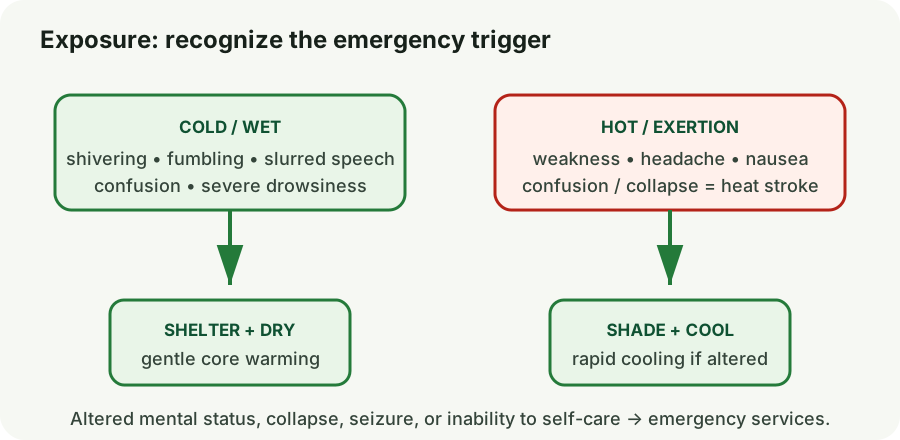
Hypothermia recognition and warming
- Get out of the environment. Move to shelter and stop further wind/water exposure.
- Remove wet clothing. Replace with dry layers and insulation around the whole body, including head and neck.
- Warm the core gently. Focus on chest, neck, head, and groin with dry insulation, warm packs wrapped in cloth, or skin-to-skin contact under dry layers when appropriate.
- Call for medical help. A measured core temperature below 95°F / 35°C is a medical emergency; serious symptoms are enough to seek help even without a thermometer.
- Handle severe cases gently. If unresponsive and not breathing normally, call emergency services and begin CPR/AED care according to training.
Important limit
Do not give alcohol. Do not force drinks into a drowsy or unconscious person. Avoid aggressive rubbing or rapid direct heat to cold, numb tissue.
Frostbite protection and rewarming
- Recognize. Numbness, white/gray-yellow skin, and skin that feels unusually firm or waxy are warning signs.
- Get indoors and check for hypothermia first. Whole-body hypothermia is the more urgent threat.
- Remove constricting wet items. Protect the area loosely from pressure and rubbing.
- Rewarm in warm—not hot—water when medical care is delayed and refreezing will not occur. Water should feel comfortably warm to unaffected skin.
- Avoid walking on frostbitten feet/toes unless necessary for survival. Seek medical evaluation.
Important limit
Do not rub frostbite with snow, massage it, or warm it with a fire, stove, heating pad, radiator, or other uncontrolled heat source. Numb tissue burns easily.
Heat exhaustion response
- Stop activity and move to shade/air conditioning.
- Remove excess clothing and equipment.
- Cool actively. Use cool wet cloths, mist/fan, cool shower, or other practical cooling.
- Give cool fluids only if fully awake and able to swallow safely. Small frequent amounts are easier to tolerate.
- Escalate if mental status is abnormal, symptoms worsen, vomiting prevents hydration, or recovery is not prompt. Those features can indicate a more serious illness.
Heat stroke emergency cooling
- Call now. Do not wait to see whether rest alone works.
- Move to a cooler place and remove outer clothing.
- Cool aggressively. Cold-water/ice-water immersion is highly effective when practical; otherwise wet the skin/clothing, fan continuously, and apply cold wet cloths or ice packs to head, neck, armpits, and groin.
- Stay with the person. Monitor breathing and responsiveness while cooling continues.
- Do not give oral fluids to someone with altered consciousness or unsafe swallowing.
Important limit
Heat stroke can occur even when the person is sweating heavily. Do not use “dry skin” as a requirement for diagnosis.
Exposure prevention and pacing
- Cold: use loose layers, a wind/water-resistant outer shell, dry socks/gloves, and frequent checks of fingers, toes, nose, ears, cheeks, and chin.
- Heat: reduce pace, schedule hard work for cooler hours, use shade, and take planned rest breaks before exhaustion.
- Hydrate consistently. Do not wait for severe thirst during sustained work.
- Avoid sweating into cold clothing. Vent or remove a layer before exertion so insulation stays drier.
- Use the buddy system. Confusion from heat or cold can prevent self-recognition; partners can spot behavioral changes early.
Practice before an emergency
- Build a cold-layer system and test whether you can vent it without exposing skin.
- Identify the coolest available room/area in your home for heat emergencies.
- Pack a dry-bag containing one full dry base layer, socks, hat, and gloves.
- Learn where cold-water immersion or rapid cooling could be performed at your workplace/event site.
- Use a buddy check phrase: “speech, hands, walking, judgment” during cold exposure.
Use guides as references, not substitutes for training
Conditions, local law, official emergency instructions, product instructions, and hands-on training can change what is appropriate. When an emergency service or responsible authority gives you a specific instruction for the active incident, follow it.
- CDC — Preventing Hypothermia
- CDC — Preventing Frostbite
- CDC/NIOSH — Heat-Related Illnesses
- American Red Cross — Heat Stroke
Source links are included so the guide can be checked against current official guidance. Review dates and local instructions before high-risk travel or seasonal hazards.
Related essential field guides
Additional procedures and printable references: