Before you begin
Wildlife observation, tracking and habitat knowledge are useful survival skills whether or not hunting is permitted. The first priorities are legality, safety, conservation and humane treatment.
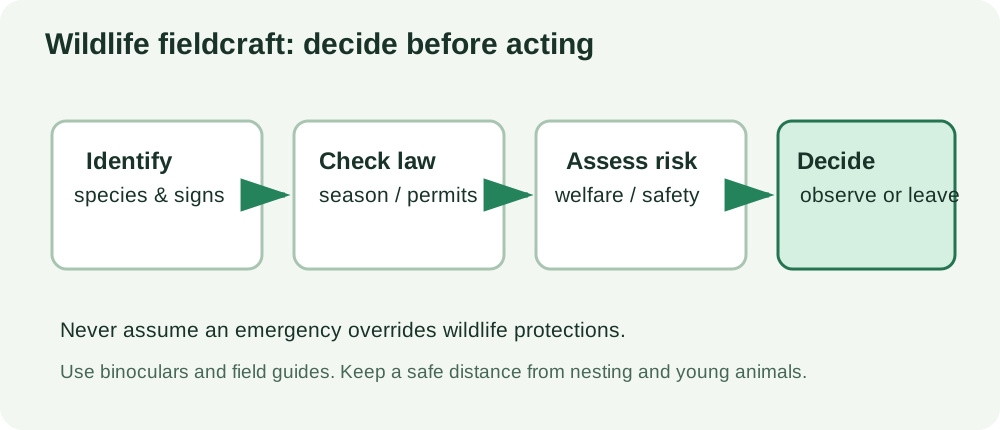
Six practical skills
Check permissions and seasons
Before any hunt, verify written landowner permission, species protections, licences, season dates, methods and reporting rules with your local wildlife authority. “Survival” is not a blanket legal exemption; national and local law may differ.
Learn non-invasive tracks and signs
Practice identifying footprints, droppings, feeding marks, trails and bedding signs with a regional field guide and photographs. Record likely species, location, weather and time without approaching nests, dens or young animals.
Read habitat and movement
Look for edges between cover and open ground, safe water access, seasonal food availability and travel corridors. Use binoculars rather than close pursuit; maintain an exit route and do not trespass.
Manage personal field safety
Tell someone your planned return time, carry a map, compass, charged phone or radio, first-aid items, weather layers and water. Stay visible to other land users and avoid placing yourself in a line of fire.
Protect non-target animals
Never disturb protected species, set indiscriminate devices or leave sharp gear and fishing lines behind. Use the least harmful lawful option; for uncertain identification, do not act.
Prefer reliable nutrition planning
A stocked food reserve, fishing where allowed and cultivated plants are usually more reliable than opportunistic hunting during short emergencies. Learn hygienic handling and foodborne illness risk before any use of wild game.
Related guides
Reference sources
Verify local laws and manufacturer guidance before field use. Information reviewed November 2026.