Before you begin
Fishing for food requires suitable local water, lawful access and a safe way to handle and cook what you catch. Knowing when not to fish is an important part of the skill.
Six practical skills
Research the fishing water
Check your licence, allowed season, protected species, size limits and whether fish consumption advisories apply. Pollution, algal blooms and industrial discharge can make fish unsafe even when caught legally.
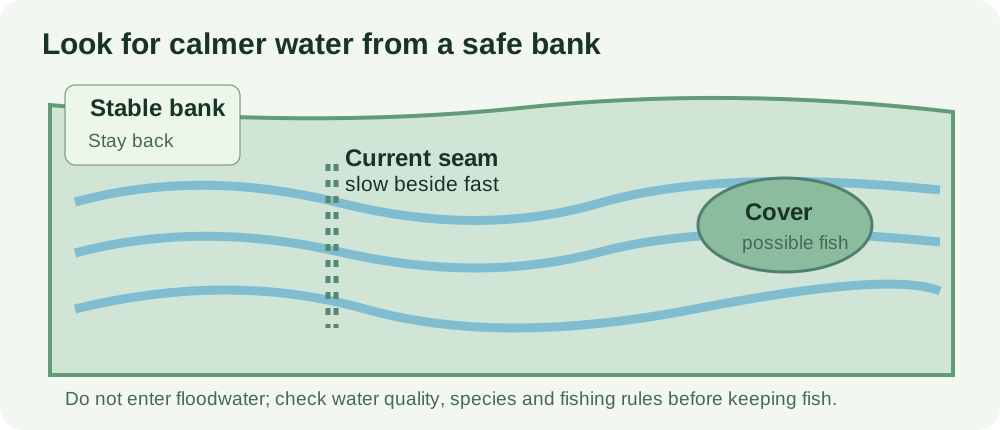
Read water from shore
Look for breaks in current, shaded cover, transitions between deep and shallow water and seasonal changes. Observe from a stable bank and keep clear of swollen rivers, slippery rocks and unstable ice.
Prepare minimal tackle
Carry line, suitable barbless hooks where feasible, small floats, a compact line cutter, pliers and a container for waste line. Match hook size to legal target species; practice tying knots before arriving. Keep hooks shielded from children and wildlife.
Handle fish with care
Use wet hands where recommended, minimize air exposure for release, avoid holding fish by vulnerable organs, and follow local humane dispatch requirements if keeping a legal catch. Unwanted bycatch should be released appropriately.
Keep and cook fish safely
Clean hands and tools; avoid cross-contamination. Chill promptly at 4 °C or below when refrigeration is available, or cook without delay. Cook fish to a safe temperature using reliable food-safety guidance; do not assume that raw freshwater fish is safe.
Keep an exit plan
Weather, tides and moving water change quickly. Bring a life jacket where appropriate, tell someone where you are going, and leave fishing line and hooks out of the environment.
Related guides
Reference sources
Verify local laws and manufacturer guidance before field use. Information reviewed November 2026.