Immediate rule
Keep battery lighting, water, a charged power bank and a plan for medically essential power. Never use generators, charcoal grills or camping stoves inside a building or garage.
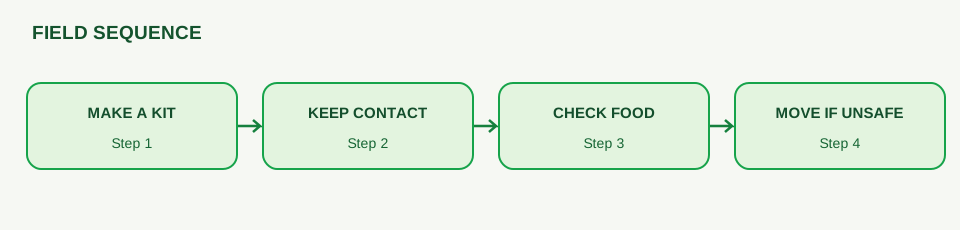
Five practical skills
A concise, repeatable field sequence. Read these before an emergency and follow official incident instructions when they differ.
Prepare a blackout box
Rule: Assemble essentials and label them so anyone can find them in the dark.
- Place LED flashlights, spare batteries, a battery-operated radio, a charged power bank, charging cables and a printed emergency contact card together.
- Store potable water, no-cook shelf-stable food, a manual can opener and daily-use medication in accessible locations.
- Keep shoes, a warm layer, blankets and a basic first-aid kit beside your supplies. Check every six months.
Protect phones and maintain contact
Rule: Save power for alerts and emergency calls, not entertainment.
- Enable low-power mode, dim the screen, disable nonessential background activity and send short SMS messages if voice calls cannot connect.
- Use a prearranged out-of-area contact and write down family meeting locations.
- Get updates from your utility, local emergency management service, or battery radio. Do not rely only on internet access.
Manage food and drinking water
Rule: Keep cold appliances closed and do not guess whether spoiled food is safe.
- Leave the fridge/freezer doors shut; an unopened refrigerator typically stays cold for about 4 hours, a full freezer about 48 hours and a half-full freezer about 24 hours.
- Use a refrigerator or food thermometer. Discard refrigerated perishables held above 4°C / 40°F for more than 2 hours.
- If water safety is uncertain, use bottled water and follow local water advisories; boiling cannot remove chemical contamination.
Avoid carbon monoxide and electrical hazards
Rule: Protect people before attempting improvised heating, cooking or rewiring.
- Use LED lamps instead of candles and keep battery-powered smoke and carbon-monoxide alarms working.
- Run generators outdoors at least 6 m / 20 ft away from doors, windows and vents, with exhaust facing away; follow manufacturer instructions.
- Never backfeed home wiring through a wall outlet or use a gas stove, charcoal grill, or camp burner for indoor heating.
Decide when to relocate
Rule: An unsafe indoor temperature or interrupted medical equipment is an emergency trigger.
- Identify which equipment, lifts, locks and refrigerated medicines need electricity and discuss backup time with the provider in advance.
- Relocate early to a safe heated/cooled location if indoor temperature becomes dangerous, medical equipment loses power or authorities instruct evacuation.
- When power returns, inspect for sparks, heat, flood damage and unusual odors before restoring appliances; call a professional when needed.
Practice before an emergency
- Put one working flashlight beside every sleeping place.
- Test your backup charger and emergency radio.
- Write your utility contact and medical-power contingency on paper.
Safety and local guidance
These notes are practical references, not a substitute for professional training or location-specific alerts. Follow emergency responders and local laws.
Reference sources:
Links are provided to help you verify these recommendations and updates.
Related essential field guides
Additional procedures and printable references: