Immediate rule
Move out of direct sun, cool painful skin gently, hydrate, and protect it from further UV exposure. Fever, confusion, fainting, extensive blistering, or significant dehydration warrants urgent assessment.
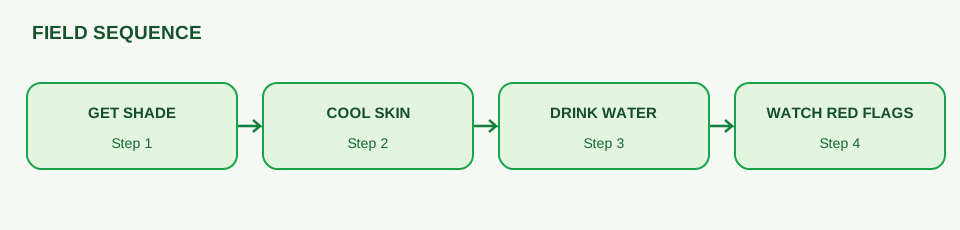
Five practical skills
A concise, repeatable field sequence. Read these before an emergency and follow official incident instructions when they differ.
Prevent UV injury
Rule: Shade, clothing and sunscreen work best together.
- Check UV forecasts before hiking, boating or working outdoors, including on cool or cloudy days.
- Wear a wide-brimmed hat, tightly woven clothing, UV-protective eyewear and seek shade.
- Apply broad-spectrum, water-resistant SPF 30+ sunscreen to uncovered skin, and reapply about every 2 hours and after swimming or sweating, following the label.
Recognize early sunburn
Rule: Pain or redness may develop hours after exposure.
- Watch for tender, warm, pink/red or darkened skin, swelling, and later peeling or blistering. Skin tone affects visible redness.
- Move to shade or indoors as soon as burning is suspected and cover the affected area from additional sun.
- Check for heat illness at the same time: headache, dizziness, weakness or overheating may need separate urgent treatment.
Cool and soothe
Rule: Use cool—not icy—water and avoid irritating home remedies.
- Take brief cool showers or place a clean, cool wet cloth on the area; pat dry gently.
- While the skin is still damp, apply plain moisturizer or aloe/soy-containing lotion if tolerated.
- Drink extra clean water. For discomfort, follow package guidance for an appropriate over-the-counter pain reliever if safe for that person.
Protect blisters and healing skin
Rule: Do not pop blisters or abrade damaged skin.
- Leave blisters intact and keep the area clean; loose, non-stick covering can protect rubbed areas.
- Avoid ice directly on skin, abrasive scrubs, butter, oils, or topical anesthetics that may irritate.
- Continue covering the skin from the sun until healed; avoid repeating the exposure.
Know when to seek medical care
Rule: Systemic symptoms or large burns are not routine sunburn.
- Seek prompt medical care for extensive blistering, worsening pain, infection signs, repeated vomiting, fever or chills.
- Call emergency services for confusion, fainting, seizures, severe heat illness or an inability to stay hydrated.
- Use extra caution with infants, older adults, sun-sensitive medications and people with a history of skin disorders.
Practice before an emergency
- Keep SPF 30+ sunscreen, a hat and a small water container in the day pack.
- Plan shaded rest stops during outdoor activities.
- Know the local heat warning and UV forecast sources.
Safety and local guidance
These notes are practical references, not a substitute for professional training or location-specific alerts. Follow emergency responders and local laws.
Reference sources:
Links are provided to help you verify these recommendations and updates.