Immediate rule
Never walk or drive into floodwater. Leave early when evacuation is advised, use designated routes and avoid electrical equipment or damaged utilities.
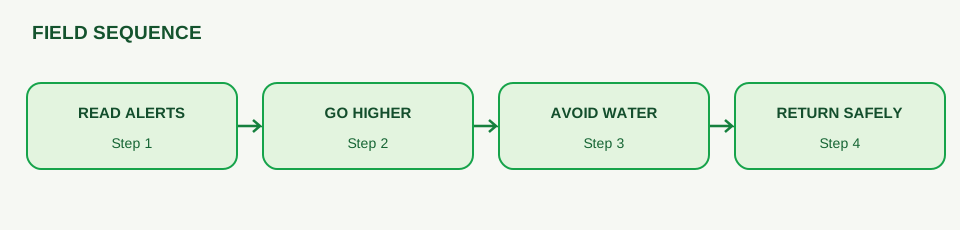
Five practical skills
A concise, repeatable field sequence. Read these before an emergency and follow official incident instructions when they differ.
Know watches, warnings and routes
Rule: Plan for the possibility that familiar roads may become impassable.
- Identify your flood risk and the local government alerts you can receive on your phone or radio.
- Find at least two routes to safe high ground or a designated shelter; mark them on a paper map.
- Move important documents, medication and grab-and-go bags above expected flood levels before the water rises, but never delay an evacuation to protect property.
Evacuate before access disappears
Rule: Do not wait to measure water depth at the door.
- Follow emergency instructions and leave immediately when directed. Tell your out-of-area contact where you are going.
- Do not drive around barricades. Flooded roadbeds may be washed away and shallow moving water can sweep vehicles or people.
- If trapped by water, call emergency services and give a precise location; move to a safe higher level if possible, avoiding attics without roof exits.
Keep away from current, sewage and electricity
Rule: The main hazards are often invisible beneath muddy water.
- Avoid all walking or wading in floodwater. It may contain sharp debris, sewage, chemicals and live electrical hazards.
- Stay clear of fallen power lines and submerged wiring. Do not touch circuit panels while standing on wet ground.
- Do not swim to retrieve belongings or attempt to cross a current; follow professional rescue instructions.
Shut off utilities only when safe
Rule: Property protection is secondary to escape.
- Learn where approved water, gas and electric shutoffs are while conditions are normal, preferably with a qualified professional.
- If officials instruct you to shut off utilities and you can do so from a dry, safe location, follow the utility instructions. Otherwise leave them alone and evacuate.
- Never re-light gas appliances or reconnect submerged electrical systems yourself; get an authorized inspection.
Return and clean up safely
Rule: A receding water level does not make a structure safe.
- Re-enter only after authorities say it is safe. Watch for structural damage, unstable surfaces and downed power lines.
- Wear suitable protection during cleanup, and discard food touched by floodwater. Follow local water-use advisories.
- Photograph damage for records when safe, and arrange professional checks of electrical/gas systems before use.
Practice before an emergency
- Check your area flood warning sources and higher-ground route.
- Label utility shutoffs and discuss operation with a qualified person.
- Keep a waterproof pouch for documents and medications.
Safety and local guidance
These notes are practical references, not a substitute for professional training or location-specific alerts. Follow emergency responders and local laws.
Reference sources:
- National Weather Service — Turn Around, Don’t Drown
- CDC — Preparing for Floods
- CDC — Floodwater Safety
Links are provided to help you verify these recommendations and updates.